MSD社のキイトルーダは発売以降、4度の再算定を受けていますが、このうち2回が共連れによる引き下げでした。

売り上げが予想を超えて巨額となったオプジーボのあおりを受けた形のため、MSDタトル社長は合理性欠くルールだとしています。

売上を伸ばしたのは競合製品であり、それに伴って自社の価格が下がったのでは利益の減少を招くため、不合理とする心情は理解できます。

では共連れによる薬価の引き下げがなかった場合にはどうなるでしょうか?

同一市場で最も売れている競合製品が、市場で最も安価になれば、MSDに対する低価格戦略、全体市場に対するコストリーダーシップ戦略が成立してしまうことになります。

同等の製品であれば、顧客はより低価格の製品を選択することは説明する必要のない明白な道理です。

さらに公定価格が適応される医薬品では、自ら価格を下げることは出来ません。

すなわち政府による共連れによって、薬価を引き下げられなければ、短期的には現状の利益を維持することが出来ても、中長期的にはオプジーボの市場占有率がより一層進むこととなり、キイトルーダの競争劣位を招くことになります。

特殊なビジネスモデルである医薬品ビジネスにおいても、競争市場においては需要と供給バランスの市場原理が働くことは避けられない事実です。

なぜなら外部環境要因は自社ではコントロールすることが出来ず、常に影響を受け、相対的に変化する必要があるからです。

護送船団方式により様々な法的保護を受けてきた製薬企業であっても、市場が縮小し、競争環境が一層厳しくなった昨今では、製薬企業は保護を求めるのではなく、競争を勝ち抜くための戦略を持つ必要があるのではないでしょうか。

“Is the Rule of Price Reduction through Joint Reassessment of Drug Prices Truly Lacking Rationality?”

MSD’s Keytruda has undergone four reassessments since its release, with two of them resulting in price reductions due to joint reassessment.

Due to the ripple effect of Opdivo, which saw enormous sales beyond expectations, MSD’s president, Mr. Tatsumi, contends that the rule lacks rationality.

As the sales surge was driven by competitor products, and the company’s own prices dropped in response, it’s understandable to consider this irrational as it leads to decreased profits.

But what would have happened if there hadn’t been price reductions through joint reassessment?

If the best-selling competitor in the same market becomes even more affordable, ONO will adopt a low-cost strategy for MSD and a cost-leading strategy for the overall market.
If products are equivalent, it’s self-evident that customers would choose the lower-priced one.

Furthermore, for pharmaceuticals subject to regulated pricing, companies cannot lower their own prices.

In other words, if government-led joint reassessment couldn’t result in price reductions, although short-term profits might be maintained, Opdivo’s market share would further grow in the medium to long term, putting Keytruda at a competitive disadvantage.

Even in the specialized business model of pharmaceuticals, the market principles of supply and demand balance are inevitable in a competitive market.

External environmental factors are beyond a company’s control, constantly influencing and necessitating relative adjustments.

Even pharmaceutical companies that have received various legal protections through the convoy system must now possess strategies to excel in competition, as markets contract and competitive environments intensify. Seeking protection might no longer suffice; a focus on strategies to triumph in competition becomes imperative.

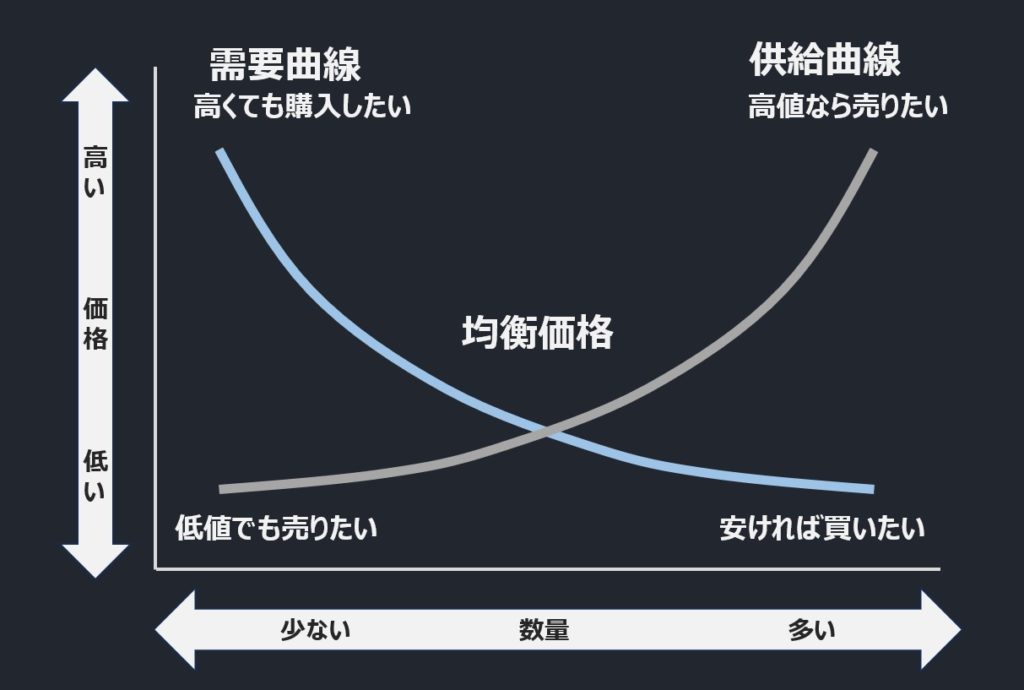
通常、品質が同じ商品があれば顧客は安い方を選びます。

そのため特定の競合製品より安くする低価格戦略や、市場で最も低価格にするコストリーダーシップ戦略が行われます。

反対に競合他社よりも製品の価格を高く設定する高価格戦略が存在します。

高品質や高付加価値、独自の特徴などを強調して、顧客に価値提供することで高価格を正当化します。

高価格戦略は、収益を増加させ、高品質、高付加価値により独占的ブランドイメージを築きます。

ただし、高価格戦略はリスクも伴います。(需要供給バランス)

  1. 需要が減少する可能性
  2. 低価格の競合製品へ切り替えられる可能性
  3. 価格競争に巻き込まれる可能性
  4. 顧客の期待を満たさない場合に信頼を失う可能性
  5. 市場環境の変化への適応力が低下する可能性
  6. 顧客獲得が難しくなる可能性
  7. 全体市場ではなくニッチ市場になる可能性

では、自社製品の薬価再算定や共連れ回避に動く、製薬会社の高価格維持の場合はどうでしょうか?

  1. 特許保護により、競合他社の市場参入が難しいため高価格を維持出来る可能性
  2. 高い品質や効果が確立された製品が選択肢となる可能性
  3. 国民皆保険により需要が維持され価格競争の影響を受けにくい可能性

医薬品市場は通常の市場とは異なる特殊性を持ちますが、同一市場に競合製品が存在する場合には市場原理の影響を受け、高価格の維持は競争力の低下から競争劣位となり、利益確保が困難となると考えられます。 

“Does the High Drug Pricing Sustaining Strategy Lead to the Sustainable Growth of Pharmaceutical Companies?: Competitive Markets and Market Principles”

Generally, when there are products of the same quality, customers tend to choose the cheaper option. This is why strategies such as a low-cost approach to undercut specific competitors or a cost leadership strategy to be the lowest-priced in the market are often employed.

Conversely, there is a high-price strategy where products are priced higher than those of competing companies. This is justified by emphasizing high quality, added value, and unique features to provide value to customers.

A high-price strategy increases revenue and builds an exclusive brand image through high quality and added value. However, this strategy comes with risks, including the potential for decreased demand, switching to lower-priced competing products, getting caught in price competition, losing trust if customer expectations are not met, reduced adaptability to changing market conditions, and difficulty in acquiring customers.

Now, let’s consider the case of pharmaceutical companies maintaining high prices through recalculating products prices or avoiding group pricing adjustments.

  1. Due to patent protection, it might be difficult for competing companies to enter the market, allowing the possibility of maintaining high prices.
  2. Established products with high quality and effectiveness could become viable options.
  3. National health insurance could help sustain demand and reduce the impact of price competition.

While the pharmaceutical market has unique characteristics distinct from regular markets, when competing products exist in the same market, the influence of market principles can’t be ignored. Maintaining high prices might lead to decreased competitiveness, resulting in a disadvantageous position and difficulties in securing profits.

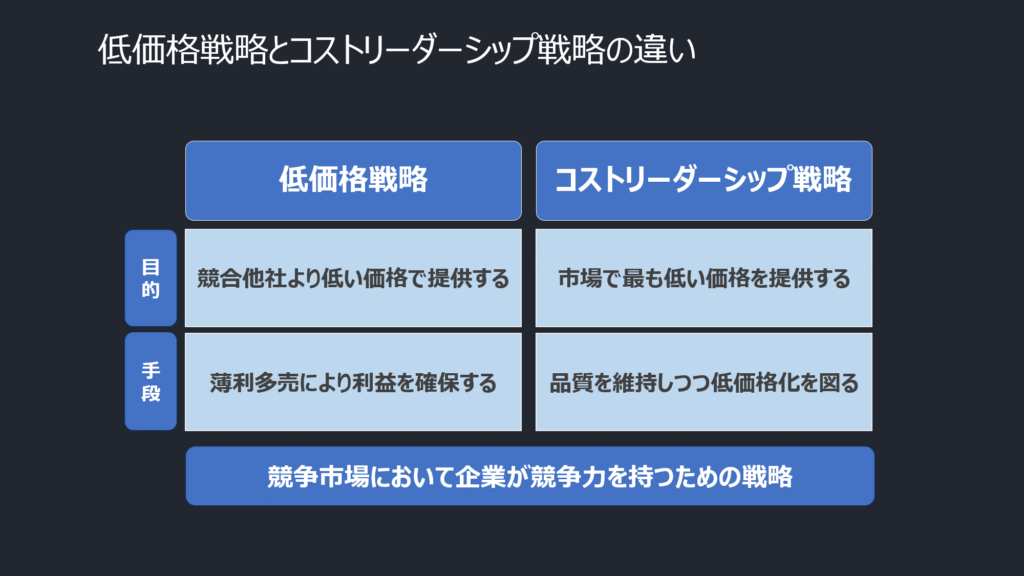
低価格戦略とコストリーダーシップ戦略は、両方とも競争市場において企業が競争力を持つための戦略ですが、微妙な違いがあります。

低価格戦略は、製品やサービスを競合他社よりも低い価格で提供することを目指す戦略です。

これによって、価格敏感な顧客を引きつけ、大量の顧客を獲得することを狙います。

単位あたりの利益が低いかもしれませんが、大量の売上を通じて利益を確保しようとします。

コストリーダーシップ戦略は、市場で最も低い製品価格を提供することを目指す戦略です。

低価格を実現するために、プロセス改善や効率化を通じてコストを削減し、品質も維持しつつ競合他社よりも低い価格を実現します。

すなわち、低価格戦略は主に価格を抑えることにフォーカスし、コストリーダーシップ戦略は低価格を提供しながらも品質と競争力を維持する総合的な競争力を追求する点が違いです。

“Differences Between Low-Cost Strategy and Cost Leadership Strategy”

Both the low-cost strategy and cost leadership strategy are approaches that companies employ to gain competitiveness in a competitive market, but they have subtle distinctions.

The low-cost strategy aims to offer products or services at prices lower than those of competing firms. This strategy seeks to attract price-sensitive customers and capture a large customer base. While the profit per unit may be lower, the objective is to secure profits through high sales volumes.

On the other hand, the cost leadership strategy aims to provide the lowest product prices in the market. To achieve this, it focuses on cost reduction through process improvements and efficiency enhancements, while maintaining quality. In essence, the cost leadership strategy not only concentrates on reducing prices but also pursues an all-encompassing competitiveness by delivering both low prices and quality that surpasses competitors.

In summary, the distinction lies in the fact that the low-cost strategy primarily centers on price reduction, whereas the cost leadership strategy seeks to maintain both quality and competitiveness while offering lower prices.

R2年次の国勢調査を用いて墨田区のデータからドラッグストアの出店を考えてみました。

背景
人口推移:生産年齢を中心に、総人口は横ばいか微増、少子化傾向あり

居住期間:10年未満の割合が高く、流出入が活発

交通手段:電車が圧倒的な移動手段であり、自動車保有率は低い

従業地:墨田区に居住しながら他エリアにて従業

推察
生産年齢層が電車にて従業しており、駅周辺の徒歩圏内が商圏となる
そのため駅周辺への出店が集客効率が高い
立地および固定費の面から小規模店となる
商品構成は生産年齢で子供のいない層を対象

“Why Are Drugstores Located Near Train Stations? – Insights from Sumida Ward Data Using the R2 Population Census”

Utilizing data from the R2 population census, we examine the factors influencing the establishment of drugstores within Sumida Ward.

Background:
Population Trends: With a focus on the working-age population, the overall population remains stable or slightly increasing, accompanied by a trend of declining birth rates.

Residential Tenure: A significant proportion of residents have lived in the area for less than 10 years, indicating active migration patterns.

Transportation Modes: Trains are the dominant mode of transportation, while car ownership rates are low.

Place of Employment: Many residents of Sumida Ward work in areas outside of the ward itself.

Analysis:
The working-age population predominantly relies on train commutes, making the vicinity around train stations a primary commercial zone.
As a result, establishing drugstores near train stations proves highly effective for attracting customers.
Considering location and fixed costs, these stores tend to be smaller in scale to optimize efficiency. 

競争環境において、競合他社からの影響を制限するための戦略に囲い込み戦略があります。

自社の強みを活用して、特定の地域、セグメント、顧客層などで強力な地位を築き、競合他社が参入しにくい状況を作り出すことを意図しています。

これにより、競合他社の成長や市場シェアの拡大を阻止し、自社の競争力を維持・向上させることが出来ます。

自社の強みにより競争優位な市場を選択するため、競合不在の市場を見つけて参入するニッチ戦略とは異なります。

また自社の強み領域を明確にすることで、競合の市場を限定的にする効果もあります。

例えば競合製品を「最後の切り札」の位置に囲い込めば、標準的治療においては自社製品が基準薬として優先使用されることになります。

ただし必須条件として、競合に対する囲い込み戦略は圧倒的なシェアを持つ市場内強者にのみ実行可能な戦略であるということです。

Title: Embracing Encirclement Strategy to Mitigate Competitive Impact

In the realm of competitive business environments, the embracement of an encirclement strategy emerges as a tactic to curtail the influence of rival companies.

By leveraging one’s own strengths, this strategy aims to establish a commanding presence in specific regions, segments, or customer demographics, thereby creating a situation that is less conducive for competing firms to enter.

This approach thwarts the growth and market share expansion of rival companies, concurrently maintaining and enhancing the competitive edge of the adopting entity.

Differing from the niche strategy that involves identifying and entering untapped markets where competition is minimal, the encirclement strategy involves selecting markets in which the adopting company’s strengths grant it a competitive advantage.

Furthermore, a clear delineation of the company’s strengths narrows down the competitive landscape, thereby limiting the potential reach of rivals.

For instance, by encircling a rival product in the role of the “last resort,” the company’s product can then take precedence as the benchmark medication in standard treatments.

However, it is essential to note that the embracement of an encirclement strategy against rivals is a tactic feasible solely for market dominators possessing overwhelming market shares. 

顧客の求める製品やサービスを提供しているはずなのに、売上インパクトが上がらない場合の要因はなんでしょうか。

  • 顧客からの認知度が低いから?
  • 競合他社との差別化が足りないから?
  • 顧客にとっての優先度が低いから?
  • 顧客ニーズを完全に理解していないから?
  • 付加価値が足りないから?

では顧客の求める製品やサービスの情報量を増やし、価値を理解させれば良いかといえば必ずしもそうではありません。

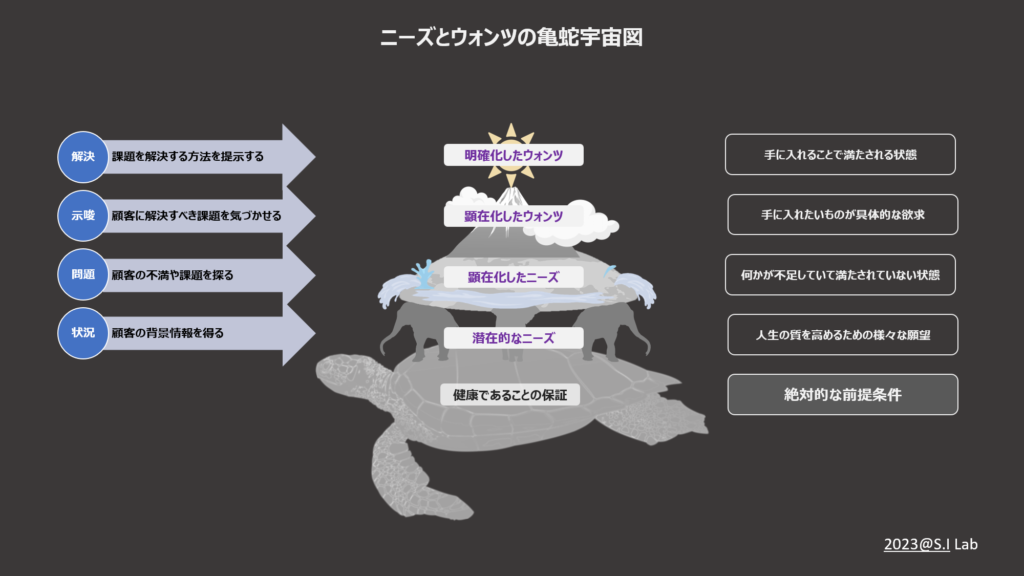
顧客自身は本当に欲しいものを知らないと言われています。

  • 顧客は自分の無意識にあるニーズや欲求を認識していない
  • 顧客は既存の選択肢や経験に基づかないニーズを想像することができない
  • 顧客は自身の知識が限られているものに対するニーズを理解できない
  • 顧客は将来的に必要とするであろう製品やサービスを理解することができない
  • 顧客は情報が過剰だとニーズを見逃し、逆に情報が不足していても同様に見逃す

顧客自身は本当に欲しいものを知らないため、顧客の隠れたニーズを顕在化し、解像度を高めることができれば、顕在化した顧客ニーズよりもはるかに大きな市場を開拓することが出来るかもしれません。

#Customer Needs 

Title: Unraveling Customer Needs: A Complex Conundrum

“Needs are ambiguous and vague nuisances.”

Even when you believe you’re providing the products or services your customers are seeking, if your sales impact remains stagnant, what could be the underlying factors?

Is it because of low customer awareness?

Is there insufficient differentiation from competitors?

Could it be that the priority of customers is low?

Perhaps, an incomplete understanding of customer needs?

Or is the lack of added value the issue?

Increasing the amount of information about your products or services and helping customers comprehend their value doesn’t necessarily guarantee success.

Customers themselves are often said to be unaware of what they truly desire.

Customers aren’t conscious of their unconscious needs or desires.

They struggle to envision needs beyond existing choices or experiences.

Their knowledge limitations hinder them from grasping needs for specialized products.

Predicting future needs isn’t a forte.

They might overlook needs due to information overload and miss them even with insufficient information. As customers aren’t inherently aware of what they truly want, uncovering latent needs and enhancing clarity might lead to the exploration of a much larger market beyond the obvious ones.

差別化と優越性の違いを正しく理解しているでしょうか?

差別化とはDifferentiation、すなわち違いです。

競合他社との比較において、自社の製品やサービスがどのように他社と異なるのかを強調し、顧客の注意を引きつけることを狙います。

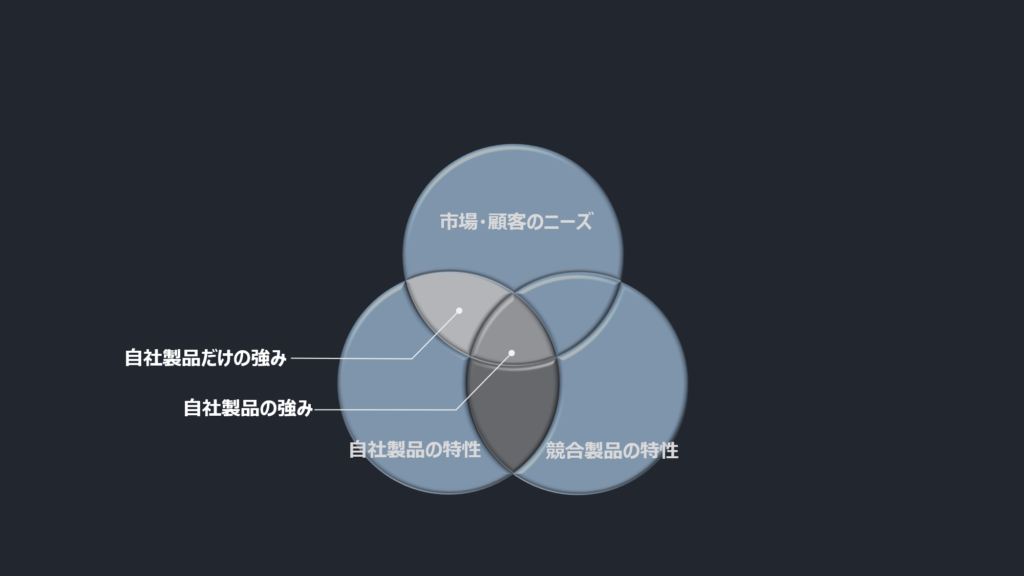
自社だけの強みに経営資源を集中投下するための手法にSTP分析があります。

優越性とはSuperiority、すなわち自社の製品やサービスが競合他社のそれよりも優れていると主張することを指します。

製品やサービスが、他社よりも高い品質、機能、性能などを持っていることを強調する戦略です。

これは参入前からその発売が期待されるブロックバスターなどでは有効ですが、製品の競争力に乏しい場合には、市場内強者の既存製品から無効化される危険性があります。

競合の存在は自社にとっては脅威ですが、むやみに攻撃するのではなく、差別化により、自社製品の特長とそれによる独自のポジショニングを築くことが重要です。

“Do You Understand the Difference Between Differentiation and Superiority?”

Do you truly grasp the distinction between differentiation and superiority?

Differentiation refers to the concept of highlighting the contrasts, in other words, the differences. It involves emphasizing how your company’s products or services stand apart from those of your competitors, with the aim of capturing the customers’ attention.

To concentrate resources on the unique strengths of your company, the method of segmentation, targeting, and positioning (STP analysis) is employed, where segmentation refers to identifying distinct customer groups, targeting involves selecting specific segments to focus on, and positioning entails establishing a distinct market presence.

Superiority, on the other hand, entails claiming that your company’s products or services are better than those of your competitors. It involves accentuating qualities like higher quality, functionality, or performance in your products or services compared to others.

While effective for highly anticipated products like blockbusters that are expected to be successful even before entering the market, this strategy can be risky if your product lacks competitiveness, as it could be rendered ineffective by existing offerings from dominant players in the market.

The existence of competitors is a threat to your company, but it is important to build a unique position based on the features of your company’s products through differentiation, rather than attacking them blindly.

なにかと世間を騒がせているビッグモーターですが、その戦略からも学ぶべきことはあります。 

購買行動モデルのAISCEASを使って解説してみましょう。 

ビッグモーターはとにかくデカいことで有名です。

ビッグモーターは地域最大規模の店舗を戦略的に出店しています。

私も初めて目にした時は驚きました。

大規模店舗戦略は、アメリカのウォルマートが有名ですが、実際に初めは外資系の会社かと思いました。

消費者の購買行動モデルは認知されることから始まりますが、認知どころか、なんだこれはと興味関心まで掻き立てられます。

また多数の車両を展示する事で、他社との比較ではなく、自社内での比較に持ち込んでいるところも上手いです。

ここまで一気に購買行動が進むことで顧客は購入に至ります。

市場内シェアが高い企業/製品が圧倒的に強い理由は、顧客から選択されやすいところにあります。

全体市場でも、ニッチ市場であってもシェアを高め、No,1になることは重要です。

またシェアには競合の存在が含まれていることはいうまでもありません。

ビッグモーターの戦略の欠点は固定費が大きくなり、利益率を下げてしまう点です。

固定費を削減出来ない場合には売上を増やすしかありません。

売上を増やすには、客数×客単価×購入頻度の各要素を上げる必要がありますが、ここが今回の闇の深い事件につながったのかもしれません。

“Learning from Big Motor: Insights to Consider”

Amidst all the buzz surrounding Big Motor, there are valuable lessons to be gleaned from their strategies.

Let’s delve into this using the AISCEAS model of consumer behavior.

Big Motor is widely recognized for its sheer size.

Strategically establishing the largest regional stores is a trademark approach of Big Motor.

I was amazed the first time I laid eyes on them.

While the grand-scale store strategy is famously associated with the likes of Walmart in the United States, I initially assumed it was a foreign-owned company.

The consumer buying behavior model begins with awareness, yet in this case, it goes beyond that, piquing curiosity and interest.

Additionally, the display of numerous vehicles not only avoids external comparisons but also ingeniously encourages internal selection.

This swift progression in the buying process leads customers to make purchases.

The strength of companies/products with high market share lies in being the easily chosen option for customers.

Dominating the overall market or even niche markets to become No. 1 is crucial.

And it goes without saying that competition is a part of market share dynamics.

A drawback in Big Motor’s strategy is the substantial fixed costs that reduce profit margins.

If fixed costs can’t be minimized, the only option is to boost sales.

Increasing sales requires enhancing three elements: customer count, average spending per customer, and purchase frequency. It’s possible that these elements contributed to the recent mysterious incident.

顧客の求める製品やサービスを提供しているはずなのに、売上インパクトが上がらない場合の要因はなんでしょうか。

  • 顧客の認知不足
  • 競合他社との差別化不足
  • 顧客にとっての優先度が低い
  • 顧客ニーズを完全に理解していない
  • 付加価値が足りない

では顧客の求める製品やサービスの情報量を増やせば良いかといえば必ずしもそうではありません。

顧客自身は本当に欲しいものを知らないと言われています。

  • 顧客は自分の無意識にあるニーズや欲求を認識していない
  • 顧客は既存の選択肢や経験に基づいてニーズを想像している
  • 顧客は自身が直接経験していないものや知識が限られているものに対してニーズを理解できない
  • 顧客は将来的に必要とするであろう製品やサービスを理解することができない
  • 顧客は過剰な情報がある場合に本当に重要なニーズを見逃すことがあり逆に情報が不足していても同様に見逃す

顧客自身は本当に欲しいものを知らないため、顧客の隠れたニーズを顕在化し、解像度を高めることができれば、顕在化した顧客ニーズよりもはるかに大きな新たな市場を開拓することが出来るでしょう。


Defining the Ideal Customers to Avoid Attracting the Wrong Ones

What factors might contribute to a lack of increased sales impact even when you believe you’re offering products or services that cater to customer demands?

  • Lack of customer awareness
  • Insufficient differentiation from competing companies
  • Low priority of your offerings for the customers
  • Incomplete understanding of customer needs
  • Inadequate added value

However, simply increasing the amount of information about your products or services that customers seek might not always be the solution.

Customers themselves are often said to be unaware of what they truly desire.

  • Customers are unaware of their unconscious needs and desires.
  • Customers imagine their needs based on existing choices and experiences.
  • Customers struggle to comprehend needs for things they haven’t directly encountered or have limited knowledge about.
  • Customers find it challenging to grasp products or services they might require in the future.
  • Customers can overlook critical needs amidst excessive information or even miss out on essentials when information is lacking.

As customers themselves aren’t entirely aware of what they truly desire, if businesses can bring latent customer needs to light and enhance the resolution of these needs, they might unlock a significantly larger new market compared to the apparent customer needs they’ve identified.

同一市場には自社と競合の2製品が参入しています。

ライフサイクルフェーズは成熟期から衰退期へと移行しており、市場成長率は10%です。

ライフサイクル分析の結果から、このままでは自社製品はシェアを4.3%落とすことになり、競合製品とのシェア差はより大きくそうです。

マトリクス分析の結果から、今期はAbフレームのC内科にリソースアロケーションを集中投下することにしました。

C内科には現状のリソースアロケーションを1.2倍に増やせば攻略が出来そうです。

訪問回数の他に、デジタルチャネルによる情報提供や上司同行、Web講演会に招聘するなどKPIを設定します。

計画通りにC内科をAaにランクアップすることが出来れば、シェア値は現在の47.2%から56.7%へ向上し、1位のポジションを入れ替えることが出来ます。

“Strategic Planning of Bilateral Competition”

Two products, one of our company and one of our competitors, are entering the same market.

The lifecycle phase is moving from mature to declining, with a market growth rate of 10%.

From the results of the life cycle analysis, the company’s products will lose 4.3% of the market share at this rate, and the market share difference with competing products is likely to be larger.

Based on the results of the matrix analysis, we have decided to concentrate resource allocation on Ab Frame C clinic this term.

C clinic seems to be able to capture if the current resource allocation is increased by 1.2 times.

In addition to the number of visits, we set KPIs such as providing information through digital channels, accompanying superiors, and inviting employees to web lectures.

If C clinic can be upgraded to Aa as planned, the share value will improve from the current 47.2% to 56.7%, and the number one position will be replaced.