
リクルートが運営する結婚情報サービス「ゼクシィ」が同性カップルや事実婚のカップルを起用した広告の設置を始めたニュースをご覧になった方も多いと思います。
性的マイノリティ(LGBT)の人権に配慮した対応だと思われますが、当コラムではビジネス目線で見ていこうと思います。
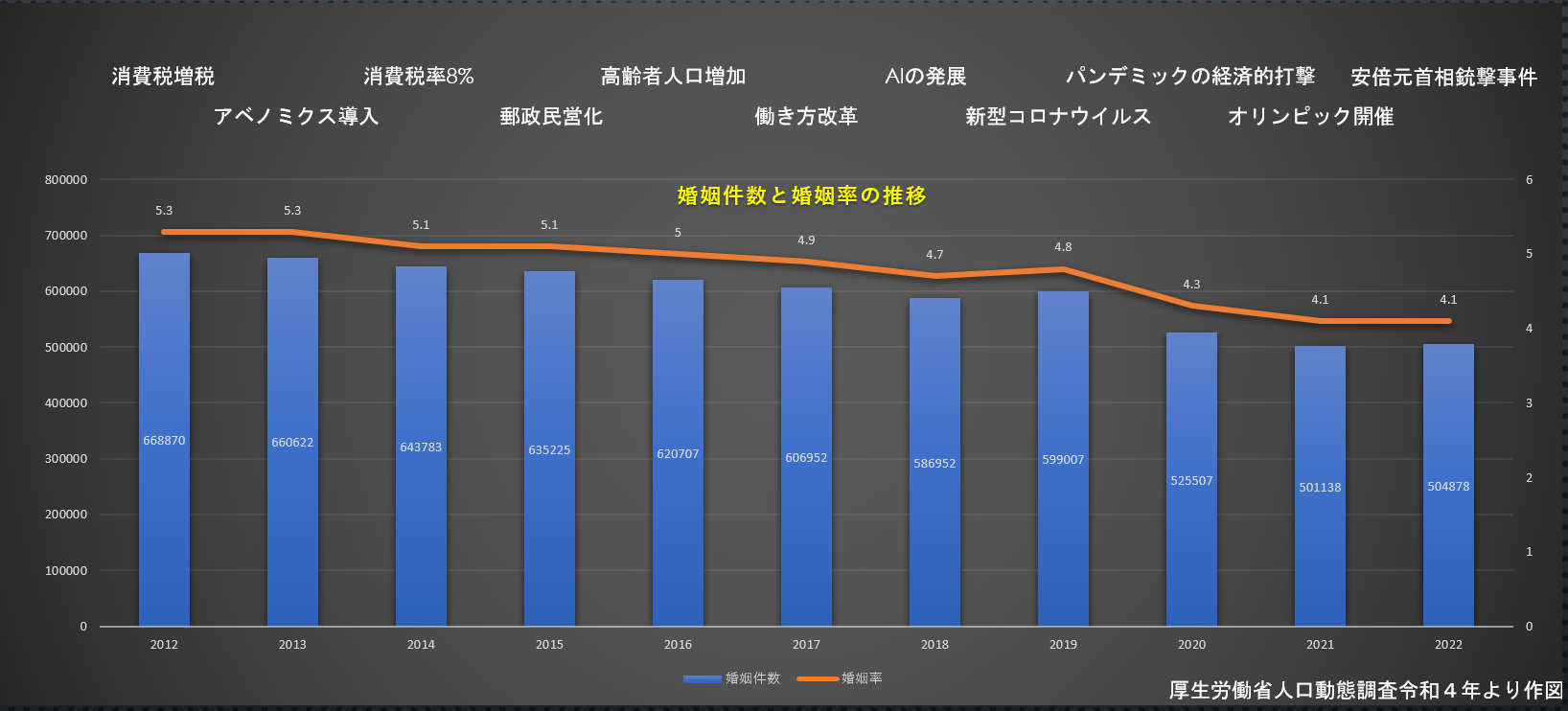
婚姻件数はこの10年間で24.5%、婚姻率で22.6%も減少しています。
この傾向は今後も改善の見込みは薄く、さらなる市場の縮小が予測されます。
このような場合での企業成長戦略は、既存製品、既存市場、新製品、新規市場の2×2の四象限で知られるアンゾフの成長マトリクスが有名です。
日本には約8.9パーセントの性的マイノリティに属する人がいると言われており、取り込みに成功すれば約9%の市場拡大が期待できます。
すなわち従来のターゲット市場に加えて性的マイノリティという新たな市場を開拓する新市場開拓戦略です。
LGBTの方の結婚相当証明書申請をしたい割合は80%を超えています。
さてゼクシィの成長戦略はうまくいくでしょうか?
*当コラムはビジネスを主眼としておりLGBTの是非に関与するものではありません
“Learning Business from Corporate Commercials”
Many of you may have seen the news about Recruit’s matrimonial service, “Zexy,” beginning to feature same-sex and common-law couples in its advertisements. While this appears to be a response considerate of the rights of sexual minorities (LGBT), in this column, we will examine it from a business perspective.
Over the past decade, the number of marriages has decreased by 24.5%, and the marriage rate has declined by 22.6%. This trend is expected to continue, with little hope for improvement, leading to further market contraction.
In such cases, the well-known Ansoff’s Growth Matrix is a famous corporate growth strategy, known for its 2×2 quadrant of existing products, existing markets, new products, and new markets.
It is said that about 8.9 percent of people in Japan belong to sexual minorities. Successfully capturing this demographic could lead to an approximate 9% market expansion. In other words, it’s a strategy of new market development, adding sexual minorities to the traditional target market.
More than 80% of LGBT individuals are interested in applying for marriage-equivalent certificates. The question then arises: Will Zexy’s growth strategy succeed?”
*This column focuses on business and is not concerned with the pros and cons of LGBT.